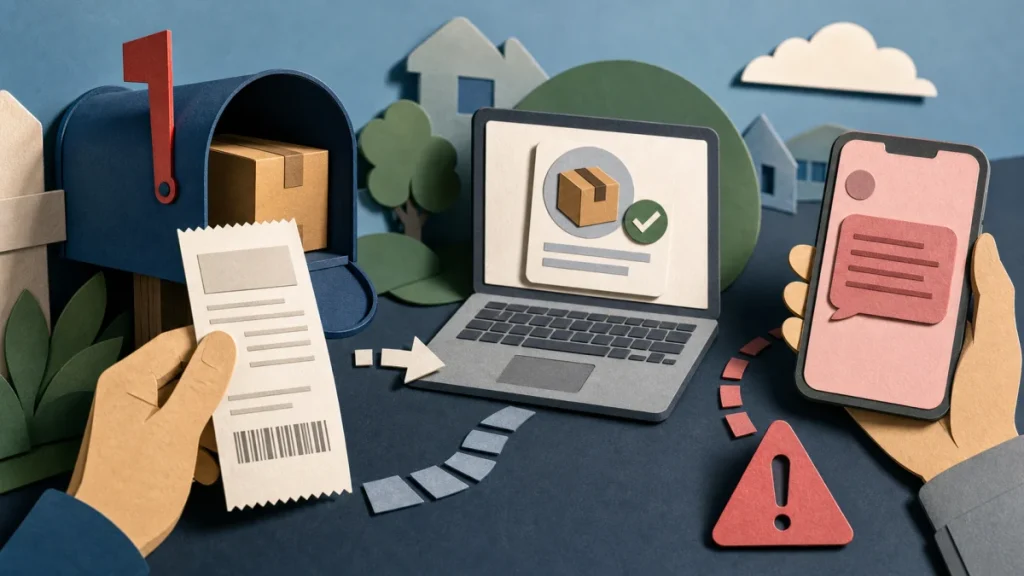
Do not click an unsolicited USPS text link. The U.S. Postal Inspection Service says USPS tracking texts are tied to a customer-initiated request and official tracking can be checked at USPS.com. Use a tracking number from the retailer or your own records, not a domain embedded in the unexpected message.
The practical objective is to separate the claim from the channel that delivered it. Type USPS.com or use the official app and enter a tracking number obtained from the seller or original order confirmation. That pause preserves your options and prevents the sender from defining both the problem and the supposed solution.
Why this approach can be convincing
Fraudulent sellers and delivery impersonators exploit normal shopping pressure: scarce items, low prices, shipping deadlines, tracking notices, and payment confirmations that are easy to imitate. The text commonly claims an incomplete address, missed delivery, held package, or small redelivery fee. Its site imitates postal branding and collects address, card, or account details. The broad timing works because many recipients happen to be expecting mail.
For a text claiming a USPS delivery problem, focus on authorization and evidence rather than confidence. A sender can copy appearance, learn personal details, or automate a conversation; the sender cannot make an unrelated account, independently listed contact, or official record confirm an event that never happened.
Clues that justify a pause
When evaluating a text claiming a USPS delivery problem, one clue may have an innocent explanation. Several clues surrounding a request for money, credentials, identity data, software, or secrecy create a much stronger reason to disengage.
- The message was not requested and contains a link to a non-USPS domain.
- A small fee requires complete card details and identity information.
- The official tracking record does not show the stated exception.
- A delivery message uses an unfamiliar domain and requests a small fee, address update, or card details.
- Product photos, policies, reviews, and business descriptions appear copied, inconsistent, or unrelated to one another.
- The price is far below the normal market without a credible explanation, or a supposedly scarce item is always available.
A safer verification sequence
Verification of a text claiming a USPS delivery problem should create a new path that the original sender does not control. Work through the following sequence and stop as soon as the claim fails an independent check.
- Define the claim: Type USPS.com or use the official app and enter a tracking number obtained from the seller or original order confirmation.
- Leave the supplied channel: Compare the price, product details, and images with an authorized manufacturer or established retailers.
- Check the real record: Read payment, return, shipping, and dispute terms before paying; confirm that the chosen transaction is eligible for protection.
- Confirm with an authorized source: For local or high-value items, inspect the item and verify ownership before releasing money or a deposit.
- Record the outcome: Navigate to the retailer, marketplace, or carrier independently and check the order or tracking number in the official account.
Do not let a verification call about a text claiming a USPS delivery problem become a continuation of the suspicious conversation. Find contact details independently, explain only what is necessary, and never disclose a password or one-time code merely to ask whether a notice is real.
Build a broader safety plan
For a text claiming a USPS delivery problem, once the immediate question is resolved, use these connected guides to reduce follow-on account, payment, or identity risk:
- If the event touches another account or payment, continue with the practical guide to UPS and FedEx delivery scam verification.
- A related control is explained in these safety steps for refund scam extra money, which can help prevent a follow-on attempt.
- Use the related spot counterfeit product listings checklist when the suspicious contact changes channel or asks for a different kind of proof.
- For the next layer of verification, see a deeper explanation of recover a hacked Facebook account before approving another request.
Contain the damage and regain control
Match the response to what actually happened during a text claiming a USPS delivery problem. Opening a message, entering a password, installing software, sharing identity data, and sending money are different events and should not be treated as interchangeable.
- 1. Preserve the text without opening the link and follow USPIS smishing reporting instructions.
- 2. Contact the card issuer if payment data was submitted.
- 3. Change credentials if a password was entered on the fake postal page.
- 4. Change credentials if you signed in through a suspicious store or delivery page, especially where a password was reused.
- 5. Report the fraudulent listing or site to the platform and, where appropriate, to ReportFraud.ftc.gov.
- 6. Stop communicating and do not send an extra fee, upgrade payment, or refund based on a message alone.
Move quickly after a text claiming a USPS delivery problem, but avoid anyone who appears after the incident and guarantees recovery. Official providers may investigate or attempt a reversal; they cannot honestly promise that money, media, or account access will always be restored.
Prevention that fits this risk
- Initiate tracking yourself so unexpected delivery messages never control the route to shipment information.
- Keep conversations, invoices, and shipping inside the marketplace so evidence and safety controls remain available.
- Track orders from the retailer account or carrier app rather than unsolicited links.
- Slow down during sales and holidays; scarcity timers and social ads are marketing signals, not proof of a legitimate seller.
Prevention around a text claiming a USPS delivery problem is strongest when it reduces the number of decisions made under pressure. Bookmarks, saved official contacts, unique credentials, account alerts, and a trusted second person turn an urgent story into a routine check.
What to do now
- ☐ Stop using the sender’s link, number, QR code, payment route, or download.
- ☐ Type USPS.com or use the official app and enter a tracking number obtained from the seller or original order confirmation.
- ☐ Preserve the text without opening the link and follow USPIS smishing reporting instructions.
- ☐ Save the original message and a short timeline before blocking or deleting it.
- ☐ Initiate tracking yourself so unexpected delivery messages never control the route to shipment information.
Frequently asked questions
Can accurate personal details authenticate the sender?
No. In the case of a text claiming a USPS delivery problem, design, caller ID, fluent writing, profile badges, screenshots, and personal details can be copied, spoofed, stolen, or generated. Confirm the underlying event and authority through an independently reached source.
Why is a separate channel important?
Type USPS.com or use the official app and enter a tracking number obtained from the seller or original order confirmation. Do not use a destination supplied by the contact you are trying to authenticate.
How quickly should I act after exposure?
Preserve the text without opening the link and follow USPIS smishing reporting instructions. Contact the card issuer if payment data was submitted. The exact response depends on whether money, credentials, identity data, or device access was involved.
Should I confront the suspected scammer?
No single clue about a text claiming a USPS delivery problem is conclusive, and no response guarantees recovery. Evaluate the full request, preserve evidence, and use official providers and reporting channels rather than an unsolicited recovery agent.