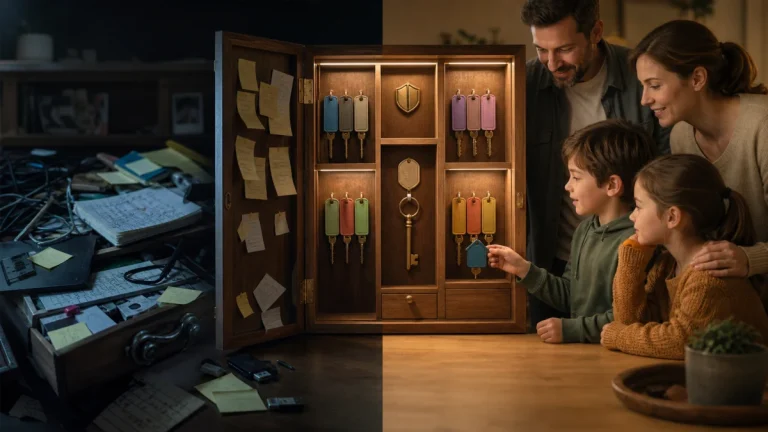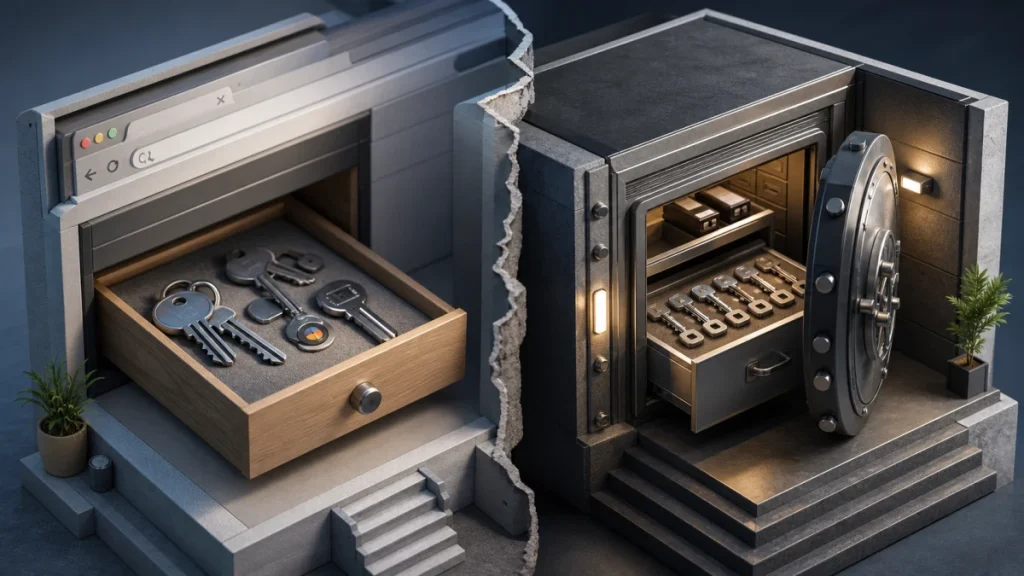
Both a reputable dedicated manager and modern browser storage can be safer than password reuse. A dedicated manager usually offers broader cross-browser support, sharing, vault organization, audits, and recovery controls; browser storage may be simpler and tightly integrated. Choose based on threat model, devices, account security, and recovery—not a universal ranking.
The practical objective is to separate the claim from the channel that delivered it. Compare encryption and account protection, platform coverage, autofill behavior, sharing, export, recovery, security alerts, and how access is revoked after device loss. That pause preserves your options and prevents the sender from defining both the problem and the supposed solution.
What is happening behind the message
Security products solve different problems. Buying by fear or by a long feature list can leave the real risk uncovered, while built-in controls, good account practices, and a carefully chosen specialized tool may be more useful. The practical security boundary includes the signed-in browser or vault account, device screen lock, sync service, extensions, and recovery. A user who adopts unique passwords with either option gains more than a user who abandons a complex tool and returns to reuse.
For a dedicated password manager compared with browser storage, focus on authorization and evidence rather than confidence. A sender can copy appearance, learn personal details, or automate a conversation; the sender cannot make an unrelated account, independently listed contact, or official record confirm an event that never happened.
Risk signals to evaluate together
When evaluating a dedicated password manager compared with browser storage, one clue may have an innocent explanation. Several clues surrounding a request for money, credentials, identity data, software, or secrecy create a much stronger reason to disengage.
- The sync account uses a reused password and no MFA.
- The user cannot tell which sites an extension or browser profile can access.
- There is no tested export or recovery path before a device or ecosystem change.
- A low introductory price hides renewal terms, device limits, feature tiers, deductibles, or exclusions.
- The seller uses a frightening pop-up or unsolicited call to claim the device is already infected.
- Critical recovery and export options are absent, making the user dependent on one device or vendor.
How to check the claim independently
Verification of a dedicated password manager compared with browser storage should create a new path that the original sender does not control. Work through the following sequence and stop as soon as the claim fails an independent check.
- Define the claim: Compare encryption and account protection, platform coverage, autofill behavior, sharing, export, recovery, security alerts, and how access is revoked after device loss.
- Leave the supplied channel: Review exclusions and limits instead of assuming a monitoring alert prevents a crime or insurance repays stolen money.
- Check the real record: Test usability during a trial with noncritical data; a control people bypass or cannot recover may not improve real security.
- Confirm with an authorized source: Define the threat first—malware, reused passwords, phishing, lost devices, new-account fraud, privacy on a network, or recovery assistance.
- Record the outcome: Compare exact capabilities, supported platforms, recovery design, update policy, privacy practices, support, and total renewal cost.
Do not let a verification call about a dedicated password manager compared with browser storage become a continuation of the suspicious conversation. Find contact details independently, explain only what is necessary, and never disclose a password or one-time code merely to ask whether a notice is real.
Build a broader safety plan
For a dedicated password manager compared with browser storage, this incident rarely exists in isolation. The following related checks close common paths a scammer may try next:
- Use these safety steps for antivirus vs internet security suite when the suspicious contact changes channel or asks for a different kind of proof.
- For the next layer of verification, see the related do you need identity theft protection services checklist before approving another request.
- If the event touches another account or payment, continue with a deeper explanation of VPN vs identity theft protection.
- A related control is explained in How to Check Whether a Scam Alert Is Real or Fake, which can help prevent a follow-on attempt.
Response steps after possible exposure
Match the response to what actually happened during a dedicated password manager compared with browser storage. Opening a message, entering a password, installing software, sharing identity data, and sending money are different events and should not be treated as interchangeable.
- 1. Secure the browser or manager account and every synced device.
- 2. Remove duplicate old stores after confirming a safe migration and backup.
- 3. Run reuse and compromised-password checks and replace the highest-risk entries.
- 4. Keep core protections—updates, unique credentials, multi-factor authentication, backups, and alerts—even after buying a product.
- 5. Do not purchase from a pop-up or unsolicited support call. Close it and obtain software through the official vendor or app store.
- 6. Remove duplicate or abandoned security tools that conflict, stop receiving updates, or retain unnecessary access.
Move quickly after a dedicated password manager compared with browser storage, but avoid anyone who appears after the incident and guarantees recovery. Official providers may investigate or attempt a reversal; they cannot honestly promise that money, media, or account access will always be restored.
Strengthen the surrounding accounts and habits
- Select the system household members will consistently use to create unique credentials and recover safely.
- Reassess subscriptions annually because platforms, built-in protections, pricing, and household needs change.
- Choose tools against a written list of needs and threat scenarios, not a fear-based countdown or generic score.
- Prefer products with clear security architecture, privacy terms, support, export, and recovery options.
Prevention around a dedicated password manager compared with browser storage is strongest when it reduces the number of decisions made under pressure. Bookmarks, saved official contacts, unique credentials, account alerts, and a trusted second person turn an urgent story into a routine check.
What to do now
- ☐ Stop using the sender’s link, number, QR code, payment route, or download.
- ☐ Compare encryption and account protection, platform coverage, autofill behavior, sharing, export, recovery, security alerts, and how access is revoked after device loss.
- ☐ Secure the browser or manager account and every synced device.
- ☐ Save the original message and a short timeline before blocking or deleting it.
- ☐ Select the system household members will consistently use to create unique credentials and recover safely.
Frequently asked questions
Can a professional-looking message still be fraudulent?
No. In the case of a dedicated password manager compared with browser storage, design, caller ID, fluent writing, profile badges, screenshots, and personal details can be copied, spoofed, stolen, or generated. Confirm the underlying event and authority through an independently reached source.
Should I reply before I verify it?
Compare encryption and account protection, platform coverage, autofill behavior, sharing, export, recovery, security alerts, and how access is revoked after device loss. Do not use a destination supplied by the contact you are trying to authenticate.
What if I already followed part of the request?
Secure the browser or manager account and every synced device. Remove duplicate old stores after confirming a safe migration and backup. The exact response depends on whether money, credentials, identity data, or device access was involved.
Is one warning sign enough to prove a scam?
No single clue about a dedicated password manager compared with browser storage is conclusive, and no response guarantees recovery. Evaluate the full request, preserve evidence, and use official providers and reporting channels rather than an unsolicited recovery agent.
This guide about a dedicated password manager compared with browser storage provides general educational information, not individualized financial or legal advice. Policies, reporting duties, dispute rights, and recovery options vary; use the official provider or a qualified professional for your situation.