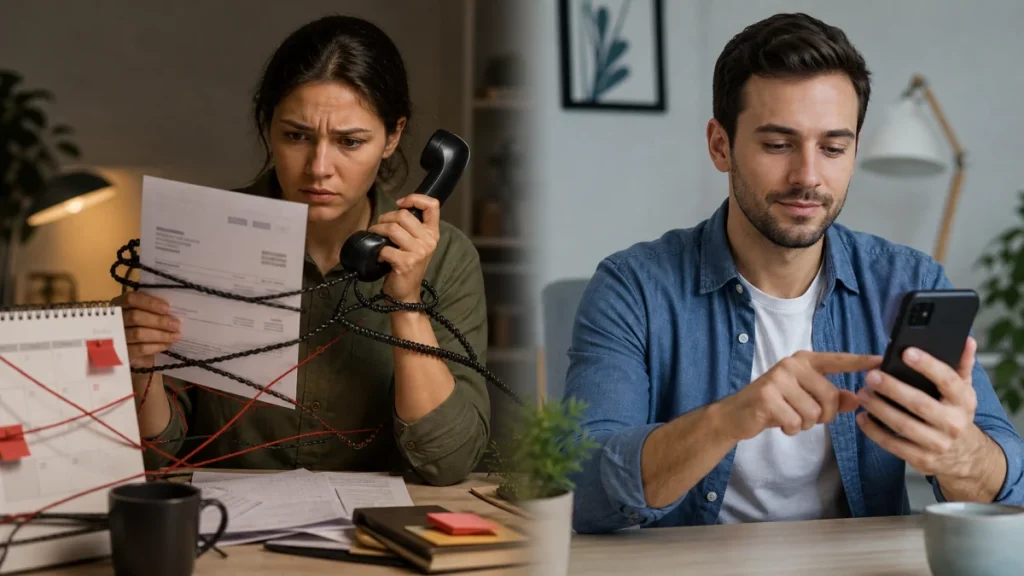
An invoice is a request, not proof that you owe money or that a charge occurred. Check the subscription inside the real account and review the relevant card or bank activity. Do not call a number in an alarming invoice; many renewal scams are designed primarily to start a fake-support conversation.
The practical objective is to separate the claim from the channel that delivered it. Open the vendor account from a bookmark or official app, examine active plans and billing history, then contact support from that account if anything is unclear. That pause preserves your options and prevents the sender from defining both the problem and the supposed solution.
Understand the underlying risk
The message may claim antivirus, cloud storage, retail membership, or technical support renewed for a large amount. It invites a quick cancellation call, where an impersonator asks for remote access, bank details, or a “refund” procedure that actually moves the victim’s money. In this context, the warning itself can be the trap: an impersonator creates a believable problem, then offers a fast path that leads to a fake phone number, payment request, login page, or remote-access session.
For an unexpected subscription renewal invoice, focus on authorization and evidence rather than confidence. A sender can copy appearance, learn personal details, or automate a conversation; the sender cannot make an unrelated account, independently listed contact, or official record confirm an event that never happened.
Red flags that matter most
When evaluating an unexpected subscription renewal invoice, one clue may have an innocent explanation. Several clues surrounding a request for money, credentials, identity data, software, or secrecy create a much stronger reason to disengage.
- The invoice has no matching charge or subscription in the official records.
- Cancellation is possible only by calling an unfamiliar number immediately.
- The caller wants remote access or asks you to log in to online banking to receive a refund.
- The explanation discourages you from speaking with a family member, your bank, or the organization through its normal channel.
- A polished logo, caller ID name, HTTPS padlock, employee badge, or accurate personal detail is presented as proof of identity.
- The requested action is unusual for the organization’s ordinary support or billing process.
A step-by-step authenticity check
Verification of an unexpected subscription renewal invoice should create a new path that the original sender does not control. Work through the following sequence and stop as soon as the claim fails an independent check.
- Define the claim: Open the vendor account from a bookmark or official app, examine active plans and billing history, then contact support from that account if anything is unclear.
- Leave the supplied channel: Leave the message untouched and open the company or agency’s app or website independently. Use a bookmark, a statement, or an address you already know.
- Check the real record: Look for the claimed event in the real account: an order, charge, case, subscription, sign-in, or security notification should have a matching record.
- Confirm with an authorized source: Contact the organization through a verified channel and describe the claim without using contact details supplied by the alert.
- Record the outcome: Ask what specific, non-secret facts can be checked. A real representative should not need a password or one-time code to explain a notice.
Do not let a verification call about an unexpected subscription renewal invoice become a continuation of the suspicious conversation. Find contact details independently, explain only what is necessary, and never disclose a password or one-time code merely to ask whether a notice is real.
Build a broader safety plan
For an unexpected subscription renewal invoice, a safer response also protects the accounts and channels surrounding this event. These related guides extend the same verification habit:
- For the next layer of verification, see a deeper explanation of government impersonation scam verification before approving another request.
- If the event touches another account or payment, continue with How to Check Whether a Scam Alert Is Real or Fake.
- A related control is explained in the practical guide to online scam warning signs, which can help prevent a follow-on attempt.
- Use these safety steps for verify an AI voice emergency call when the suspicious contact changes channel or asks for a different kind of proof.
How to respond without making the loss worse
Match the response to what actually happened during an unexpected subscription renewal invoice. Opening a message, entering a password, installing software, sharing identity data, and sending money are different events and should not be treated as interchangeable.
- 1. Do not pay or call; mark the invoice as phishing after preserving it if needed.
- 2. Dispute an actual unauthorized charge with the issuer and real vendor.
- 3. Secure the account if the vendor shows an unknown subscription or profile change.
- 4. If credentials were entered, change the affected password from a trusted device and end unfamiliar sessions.
- 5. If money or card data was involved, contact the bank or payment provider immediately using its official app or the number on the card.
- 6. Save the original message, sender details, URL, time, and receipts before blocking or deleting it.
Move quickly after an unexpected subscription renewal invoice, but avoid anyone who appears after the incident and guarantees recovery. Official providers may investigate or attempt a reversal; they cannot honestly promise that money, media, or account access will always be restored.
Build a durable safety routine
- Keep a simple subscription list with renewal dates so an unexpected invoice can be compared with known commitments.
- Use unique passwords and stronger multi-factor authentication so one deceptive message cannot unlock several accounts.
- Store official support and fraud numbers before an emergency, especially for banks, mobile carriers, and frequently used services.
- Turn on account and transaction alerts, but treat every alert as a prompt to check the real account rather than a reason to follow an embedded link.
Prevention around an unexpected subscription renewal invoice is strongest when it reduces the number of decisions made under pressure. Bookmarks, saved official contacts, unique credentials, account alerts, and a trusted second person turn an urgent story into a routine check.
What to do now
- ☐ Stop using the sender’s link, number, QR code, payment route, or download.
- ☐ Open the vendor account from a bookmark or official app, examine active plans and billing history, then contact support from that account if anything is unclear.
- ☐ Do not pay or call; mark the invoice as phishing after preserving it if needed.
- ☐ Save the original message and a short timeline before blocking or deleting it.
- ☐ Keep a simple subscription list with renewal dates so an unexpected invoice can be compared with known commitments.
Frequently asked questions
Does a familiar name or logo prove the contact is real?
No. In the case of an unexpected subscription renewal invoice, design, caller ID, fluent writing, profile badges, screenshots, and personal details can be copied, spoofed, stolen, or generated. Confirm the underlying event and authority through an independently reached source.
What should I verify first?
Open the vendor account from a bookmark or official app, examine active plans and billing history, then contact support from that account if anything is unclear. Do not use a destination supplied by the contact you are trying to authenticate.
What should I do after sharing information?
Do not pay or call; mark the invoice as phishing after preserving it if needed. Dispute an actual unauthorized charge with the issuer and real vendor. The exact response depends on whether money, credentials, identity data, or device access was involved.
Can a security tool make this risk disappear?
No single clue about an unexpected subscription renewal invoice is conclusive, and no response guarantees recovery. Evaluate the full request, preserve evidence, and use official providers and reporting channels rather than an unsolicited recovery agent.